USMLE is changing how it offers tests. Starting in 2028, USMLE will move to Designated Testing Dates. This means Step 1, Step 2 CK, and Step 3 will run on just 45 testing days a year, combined. Today, you can test on almost any weekday. After 2028, you cannot.
USMLE made this move to protect exam security. Your eligibility rules will not change. Your score timeline will not change. This guide breaks down what is changing, why it matters, and what Indian MBBS students and IMGs should do now.
What is Changing: The Core Facts
USMLE is moving away from on-demand testing. Here is what changes:
- USMLE shifts from year-round testing to fixed Designated Testing Dates.
- All three Step exams share a total of 45 testing days per year.
- USMLE will add more Prometric test centers.
- USMLE will reserve seats only for USMLE examinees at these centers.
- This change comes from an official announcement by FSMB and NBME on June 23, 2026.
Today, you pick a three-month eligibility window and test on almost any weekday. After 2028, you will test only on the dates USMLE sets. This is a major shift in the USMLE exam schedule. It impacts your planning for prep, eligibility window and residency timeline.
The 2028 Testing Calendar: 45 Days, Explained
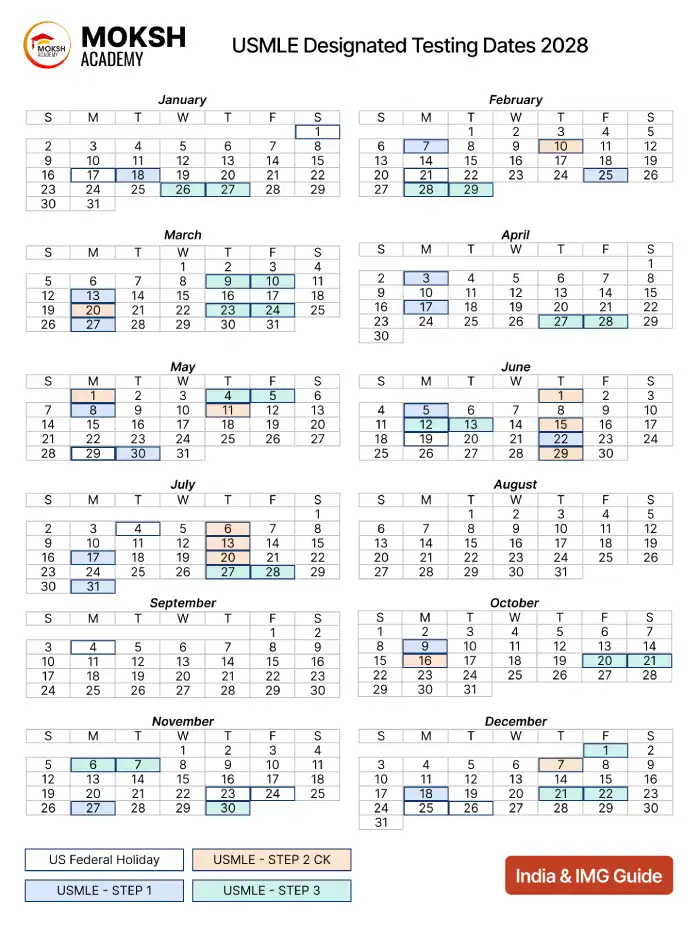
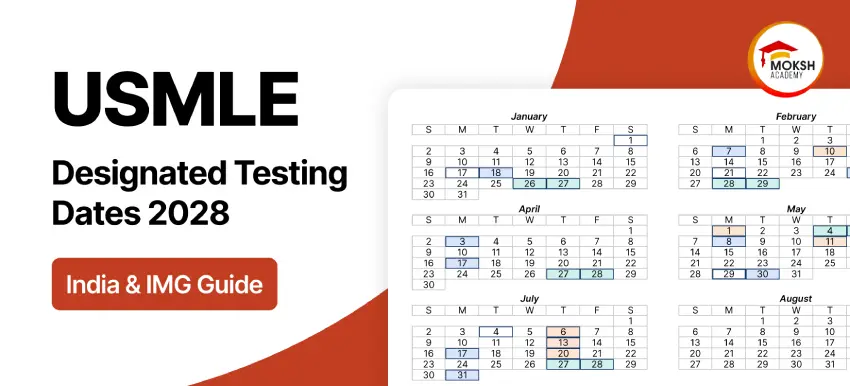
This 2028 calendar has been released by USMLE. It displays the distribution of the 45 testing days throughout the year.
| Step Exam |
2028 Pattern |
Key Note |
| Step 1 |
Spread across several months |
Based on past global testing trends |
| Step 2 CK |
Fewer months than today |
Reduced availability in certain months |
| Step 3 |
Limited days, US only |
Still administered only in the US |
USMLE will publish each year's dates one year in advance. They do this so that students can plan their USMLE journey. The actual number of days in each month may change a little. But the average will be 45 days in a year. Check the official 2028 calendar image above before you lock in your test plan.
Why Is USMLE Making This Change?
USMLE wants to protect exam security and score validity. Fewer test days mean less chance that leaked questions spread before everyone tests. This ensures that honest test takers are not being graded incorrectly.
Here is the short version:
- Limited dates cut down on test content leaks.
- Other high-stakes exams use this same security model.
- USMLE wants every score to reflect real skill, not shared answers.
USMLE has worked on this plan for several years. It is not a quick fix. It is a long-term shift in how the exam protects its content.
What Stays the Same
Not everything is changing. Here is what stays the same:
| Area |
Status |
| Eligibility requirements |
No change |
| Score reporting time |
No change (2 to 4 weeks; allow up to 8) |
| Test accommodations (ADA) |
No change in process |
| Exam content and difficulty |
No change |
You still apply the same way. You still need the same eligibility requirements. Your score still arrives in the same time window. If you use test accommodations, your request process stays the same. USMLE says it will add more separate testing rooms for accommodated test-takers.
This matters most for Indian MBBS students who worry the whole system is changing. Most of your prep plan stays exactly the same.
What This Means for Indian MBBS Students and IMGs
If you are an IMG from India, this change touches your plan in a few key ways:
- Step 2 CK has fewer available months under the new calendar. This is the score residency programs check most closely. Plan your Step 2 CK attempt earlier, not later.
- USMLE test centers in India should grow under this plan. USMLE says it will add more Prometric seats reserved just for USMLE test-takers. This should help, but exact locations are not out yet.
- Booking early matters more than ever. With only 45 days a year, popular dates will fill fast. Lock your eligibility period as soon as you can.
- If you are in your pre-final or final MBBS year and plan to test in 2028 or later, build extra buffer time into your Step 1 to Step 2 CK sequence.
- If you test before 2028, none of this affects you. The current on-demand system stays in place until then.
This change adds pressure to plan early. It does not add pressure to study differently. The exam content and pass standard stay the same.
What We Still Don't Know
USMLE has not finalized every detail. Here is what remains open:
- Length of the eligibility period under the new system
- Reschedule and cancellation fee rules
- Exact list of new test center locations
USMLE will host community engagement sessions in July and August 2026. These sessions will cover open questions with live Q&A. After that, USMLE plans to share updates every quarter. Bookmark the official Designated Testing Dates Information Hub for these updates.
What to Do Now
Here is your action plan:
- Bookmark the official USMLE Designated Testing Dates hub page.
- If you test before 2028, take no action. The current system still applies to you.
- If you plan to test in 2028 or later, start building extra time into your Step 2 CK schedule now.
- Watch for the July to August 2026 community sessions for fresh updates.
- Recheck this page each quarter, since USMLE plans regular updates.
Stay informed, plan early, and you will be ready.