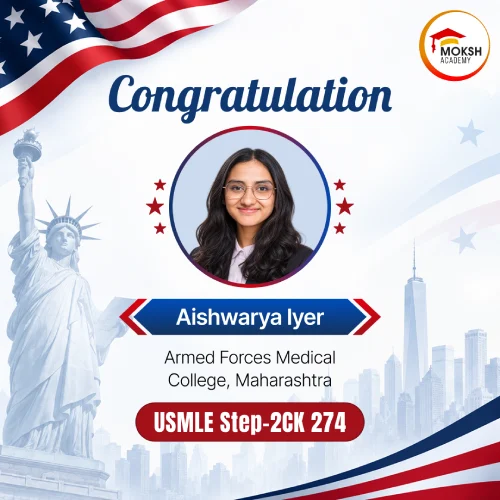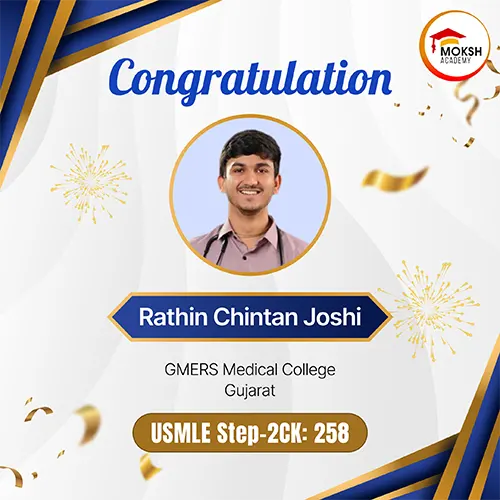
In January 2022, USMLE Step 1 went pass/fail. That one change shifted everything for Indian doctors.
Your Step 2 CK score is now the only number that separates you from thousands of other applicants. The non-US IMG match rate sits at 58% - compared to 94.2% for US medical graduates. Indian doctors are one of the largest IMG groups trying to crack that gap.
The barriers are real. They are specific. And most of them can be solved - if you know what they are before you run into them. This article breaks down all seven.
Challenge 1 - Why is Step 2 CK Now the Single Most Important Number for Indian IMGs?
Step 2 CK is the primary numerical filter that program directors use to screen all IMG applications. Passing is not enough. The matched non-US IMG average was 248 for Internal Medicine in 2024. Anything below 240 puts you below the cutoff for most automated electronic filters.
Program directors use your score as a proxy for clinical competence. They are not familiar with your Indian medical school. They cannot verify your clinical training. A high score removes that doubt.
There is also a visa dimension. An H-1B visa sponsorship threshold generally sits at 250 or above. A score below that limits your visa options before your application even reaches a human.
Here are the score targets Indian IMGs should aim for:
| Specialty |
Non-US IMG Matched Avg (2024) |
Safe Target for Indian IMGs |
| Internal Medicine |
248 |
255+ |
| Family Medicine |
241 |
250+ |
| Pediatrics |
245 |
260+ |
| Psychiatry |
242 |
260+ |
| Neurology |
246 |
260+ |
| General Surgery |
249 |
265+ |
How to overcome it: Set your target 10 to 15 points above the matched average for your specialty - not at it. Do not sit for the exam until your NBME practice scores consistently land in that range.
Challenge 2 - How Do Indian MBBS Graduates Shift from Rote Learning to USMLE Clinical Reasoning?
The USMLE does not test what you know. It tests what you do next. That is a fundamental shift from how most Indian medical schools train students.
Indian medical education is built on memorizing diagnoses and treatment protocols. USMLE Step 2 CK clinical reasoning is built on choosing the safest, least invasive, and most cost-effective next step. These are not always the same thing.
A simple example: an Indian physician might order a CT scan first. The USMLE might reward a physical exam maneuver or a period of watchful waiting. That gap costs points.
There are also knowledge areas that Indian training rarely covers - and the exam tests every cycle:
- HIPAA and patient privacy law
- US health insurance and cost-effective care decisions
- Informed consent frameworks in the US system
- Preventive care guidelines specific to the US
Another trap: Indian applicants over-prepare for Internal Medicine and neglect Pediatrics, Surgery and OB-GYN. Poor scores in those subjects drag your total below 240, even with a strong Internal Medicine performance.
How to overcome it - the resource hierarchy
- UWorld Step 2 CK: Complete a minimum of 1.5 passes. First pass in tutor mode to build reasoning. Second pass in timed random mode to simulate exam pressure. The question bank has over 3,500 questions.
- NBME Comprehensive Self-Assessments: Treat these as your gate. Do not book the real exam until your NBME scores are consistently in your target range.
- MOKSH Academy: They can provide individual Coaching and Mentoring if that is what you need. They have Adaptive Learning tools and Analytics that will allow you to monitor your prep journey. They use high yield Q-Banks and exam style real test in their curriculum. You can also ask for a custom schedule.
Get USMLE Coaching
Challenge 3 - Cost of the Whole USMLE to Residency Path for Indian Students in 2026?
If an Indian IMG manages his entire process in 2026, the total cost is around $19,000 USD which is about Rs. 16 lakh. This is before Step 3, visa application costs or variable USCE pricing.
One cost that surprises many candidates: as of December 4, 2024, India applies an 18% GST on USMLE exams taken at Prometric centers within India. This tax is added on top of the base fee and the international surcharge - not just the base fee alone.
| Expense |
Total (USD) |
Total (INR approx.) |
| USMLE Step 1 (with GST + surcharge) |
$1,068 |
Rs.90,780 |
| USMLE Step 2 CK (with GST + surcharge) |
$1,097 |
Rs.93,245 |
| ECFMG + MyIntealth fees |
$690 |
Rs.58,650 |
| OET Medicine |
$455 |
Rs.38,675 |
| USCE - 3 months (variable) |
$6,000 |
Rs.5,10,000 |
| ERAS (100 programs) + NRMP |
$2,800 |
Rs.2,38,000 |
| Total Estimated |
$19,000 |
Rs.16,15,000 |
How to overcome it: Plan your budget phase by phase, not as one lump sum. USCE is the largest and most variable cost. The single most effective way to reduce it is through your own alumni network - Indian doctors who trained at your medical college and are now practicing in the US. A personal connection can convert a paid rotation into a free observership.
Challenge 4 - What Is the MyIntealth Transition, and What Do Indian Applicants Need to Know About the Seven-Year Rule?
MyIntealth is now the single portal for all ECFMG services. It replaced the old IWA and OASIS systems. If you are starting the process in 2026, you will do everything here - exam registration, credential verification, and pathway applications.
The ECFMG certification process follows this order:
- Create a MyIntealth account and pay the $110 platform fee
- Submit the ECFMG Certification Application ($580)
- Notarize Form 186 through NotaryCam to confirm your identity
- ECFMG contacts your medical school to verify your MBBS degree and transcripts ($220)
One important reassurance for Indian applicants: in September 2023, India's National Medical Commission received 10-year WFME Recognition Status. This confirms that Indian graduates remain fully eligible for ECFMG certification and US residency training through the next decade.
Now for the rule that catches many Indian IMGs off guard - the Seven-Year Rule. All USMLE requirements - Step 1, Step 2 CK, and your ECFMG Pathway - must be completed within seven years of passing your first exam. If you miss that window, you must retake exams. That adds both time and significant cost.
For the 2027 Match, OET Medicine scores must reach ECFMG by January 31, 2027. That means you must sit for the OET Medicine exam no later than December 2026.
How to overcome it: The day you receive your Step 1 result, map your seven-year window on a calendar. Treat OET Medicine as a task to complete in parallel with your Step 2 CK preparation - not something to handle later.
Challenge 5 - How Can Indian IMGs Get U.S. Clinical Experience Without Spending Rs. 5 Lakh on Paid Rotations?
USCE is what separates you from other applicants once your Step 2 CK score clears the initial screen. It also gives you something no exam score can: a US-based Letter of Recommendation from a physician who has seen you work.
Not all clinical experience carries equal weight:
| Type |
Hands-on? |
LOR Value |
Cost |
| Clerkship (pre-graduation) |
Yes |
Highest |
Low if via medical school |
| Externship (post-graduation) |
Yes |
High |
Variable |
| Observership |
No |
Moderate |
Low to free |
| Tele-rotation |
No |
Lowest |
Low |
Program directors value hands-on experience because it shows you can function in a US clinical environment. Observerships are less impactful but still worth doing - especially if you can convert them into a Letter of Recommendation.
How to reduce USCE costs:
- Search your medical college alumni network for doctors currently practicing in the US
- Send a professional CV and a short, personalized email that explains your specialty interest and your goals
- Start this outreach while you are still studying for Step 2 CK - not after you have passed
How to overcome it: Aim for at least one hands-on rotation. If that is not possible, an observership is still better than no US clinical experience at all. Start outreach early. Personal connections remain the most effective path to free USCE.
Challenge 6 - Can Indian IMGs Build a Competitive Research Profile Without a US-Based Mentor or Lab?
Yes - and systematic reviews are the fastest route. They require no laboratory, no US institution, and no travel. All the data you need is publicly available on PubMed, Scopus, and Google Scholar.
This matters more than ever. For the 2027 ERAS cycle, the Publications section is being renamed "Scholarly Works," with explicit emphasis on peer-reviewed contributions. Research is no longer optional for competitive applications - especially for university programs.
What works for Indian IMGs building a research profile:
- One PubMed-indexed publication outweighs a dozen posters at non-indexed local conferences
- Program directors verify every publication by PMID - non-indexed work is often invisible to them
- Cureus journal: free to publish if you follow their formatting guidelines, PubMed-indexed, widely used by IMGs
- Indian Journal of Medical Research: PubMed-indexed, globally recognized
- Indian Journal of Surgery: PubMed-indexed, strong credibility
How to overcome it: Choose a systematic review in your target specialty during your internship. Submit to Cureus or IJMR. One solid publication done right is worth more than anything that is not indexed.
Challenge 7 - How Should Indian Doctors Handle the ERAS Application, Virtual Interviews, and SOAP from a 9.5-Hour Time Difference?
The time zone gap is manageable - but only if you prepare for it like a sprint, not a passive wait. Match Week runs on US Eastern Time. For Indian candidates, that means critical events happen late at night and into the early hours of the morning.
| SOAP Event |
US Eastern Time |
IST |
| Match Status Notification |
Monday 10:00 AM |
Monday 7:30 PM |
| SOAP Applications Open |
Monday 11:00 AM |
Monday 8:30 PM |
| SOAP Round 1 Offers |
Thursday 9:00 AM |
Thursday 6:30 PM |
| SOAP Round 4 Offers |
Thursday 6:00 PM |
Friday 3:30 AM |
ERAS application framing for Indian doctors:
Do not list "Internship" as a single line on your CV. Describe the patient volume, the specific procedures you performed, and the decisions you made without supervision. Rural bond service is not mandatory service - it is primary care leadership and public health management. Frame it that way.
Virtual interview setup checklist:
- Use a wired Ethernet connection - not Wi-Fi
- Have a mobile hotspot tested and ready as a backup
- Camera at eye level, look at the lens - not the screen
- Plain wall or neat bookshelf background; skip virtual backgrounds
SOAP strategy: You are limited to 45 applications. Use the 21-hour window between Monday 11:00 AM ET and Tuesday 8:00 AM ET - that is Monday night into Tuesday IST - to research unfilled programs. Identify which ones sponsor J-1 or H-1B visas and have a history of accepting Indian medical graduates. Prioritize programs that already interviewed you in the main cycle. They have seen your application. They are the safest bet.
Conclusion - Your 7-Point Quick Reference
Every challenge above has a solution. Here is the full picture in one table.
| Challenge |
One-Line Fix |
| Score pressure |
Target 10–15 points above the matched IMG average for your specialty |
| Clinical reasoning gap |
UWorld 1.5 passes + AMBOSS ethics; gate the real exam behind NBME scores |
| Financial burden |
Budget by phase; use alumni networks for free or low-cost USCE |
| Admin complexity |
Map your Seven-Year Rule from Day 1; OET no later than December 2026 |
| USCE access |
Start alumni outreach during Step 2 prep, not after you pass |
| Research gap |
One systematic review in a PubMed-indexed journal, started during internship |
| Time zone + ERAS |
Use Monday night IST for SOAP research; frame Indian training as clinical autonomy |
None of these challenges are unique to you. Thousands of Indian doctors have cleared each one. The difference is knowing what you are facing before it faces you.